



Skip to content

Your company thinks ahead.Does your building?

Building technology becomes operational intelligence: understand energy, control consumption, bring systems together — easy to follow and easy to extend.

  • Photovoltaics
  • Battery storage
  • EV charging infrastructure
  • Smart building

Impact

Less complexity. More control. One system.

Building technology is an economic factor. It is rarely managed like one.

  • Self-consumption instead of export

    Energy generated on site is used in operations before it leaves the property — coordinated across every controllable load.

  • An eye on peak loads

    Controllable systems do not all start at the same moment. An analysis of the load profile shows where the potential is.

  • Transparency for every area

    Consumption becomes visible where it occurs. Only then can a decision be justified.

  • One system instead of eight silos

    HVAC, lighting, shading, security, access, energy, charging and storage in one architecture.

  • Protection for existing investments

    Existing installations are integrated wherever that makes technical sense. What demonstrably stands in the way is replaced.

  • Scalable across sites

    What works at one site carries over to the next as an architecture.

Services

Four areas. One system.

Photovoltaics, battery storage, EV charging infrastructure and smart building — each area worthwhile on its own. Planned together, worth considerably more.

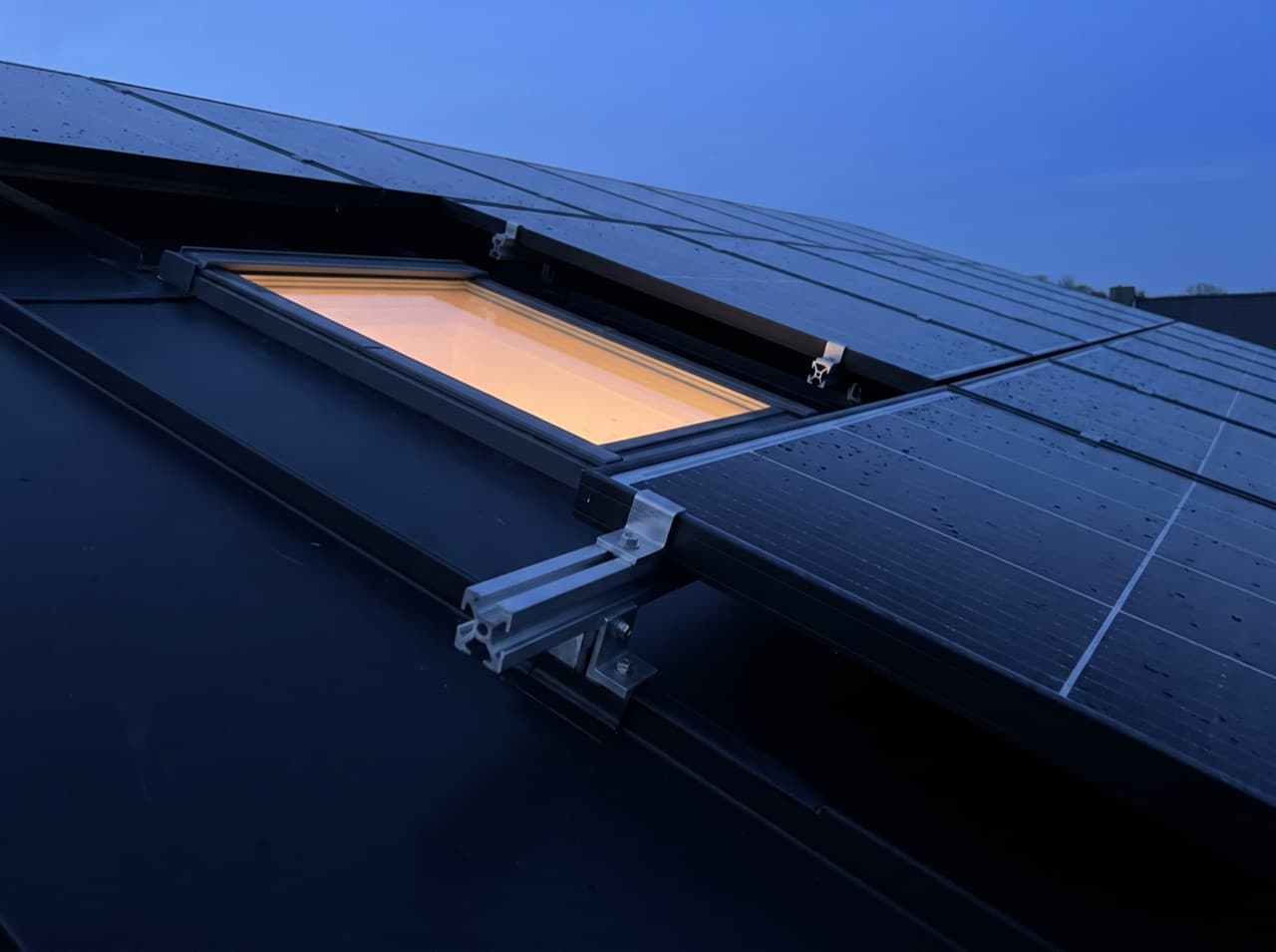
  • Illustrative image: photovoltaic modules on a dark roof at blue hour

    Photovoltaics

    Use more of your own solar power — because the system is sized together with storage, charging and loads from the very start.

    • Sized to the actual consumption profile, not to roof area alone
    • Integration of existing systems where it makes technical sense
    • Generation visible and controllable within the overall system
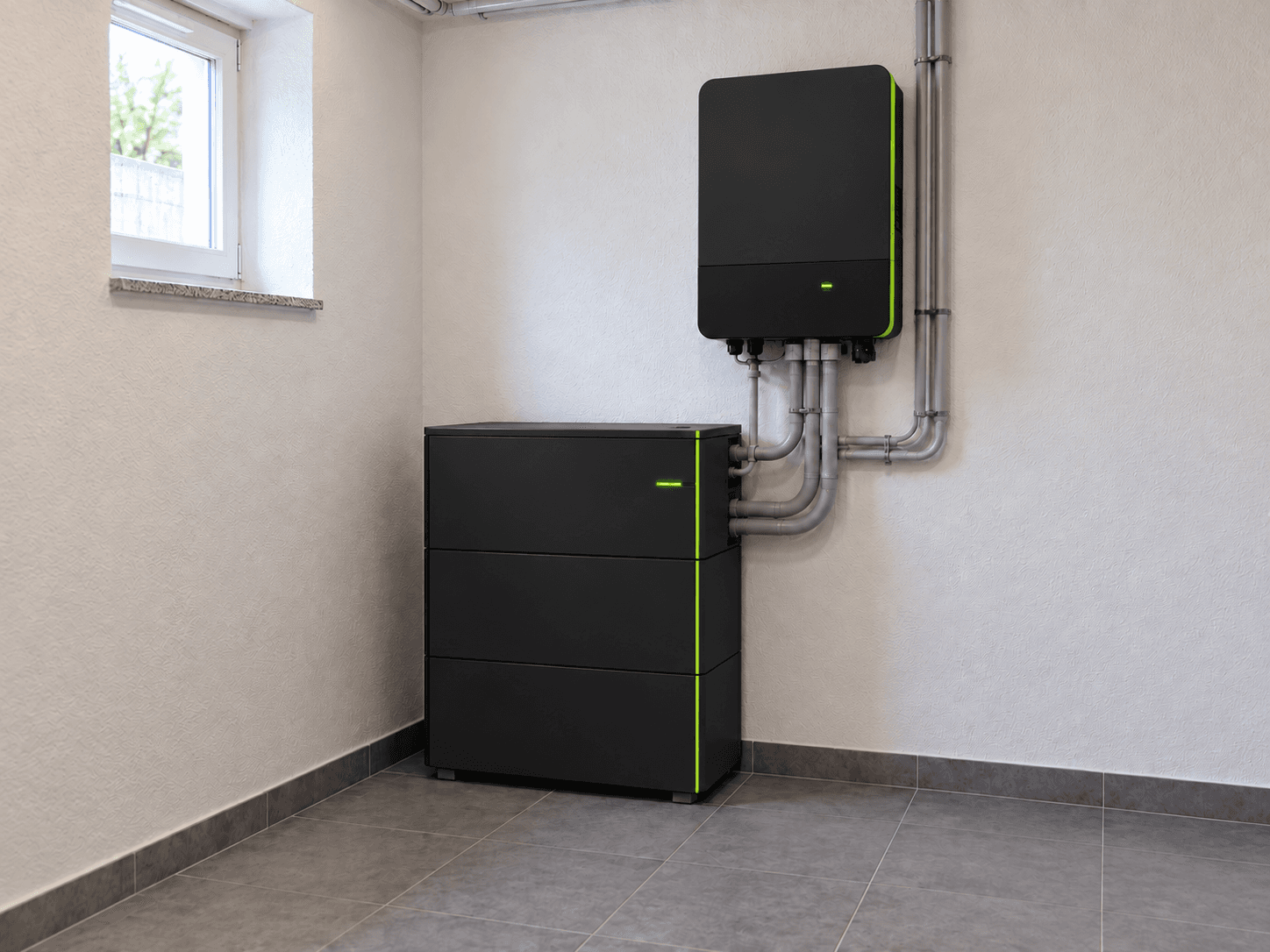
  • Illustrative image: battery storage and inverter in a home utility room

    Battery storage

    Use midday solar power in the evening — and cushion peak loads instead of covering them expensively from the grid.

    • Sized to match generation and consumption
    • Clear rules for when it charges and when it discharges
    • Works in concert with EV charging and building loads
  • Illustrative image: a car charging under a carport at a home

    EV charging infrastructure

    Charge vehicles without overloading the grid connection — with priority for your own solar power wherever it is available.

    • Planned with dynamic load management across all charging points
    • Surplus solar charging and prioritization by need provided for
    • Prepared for additional charging points
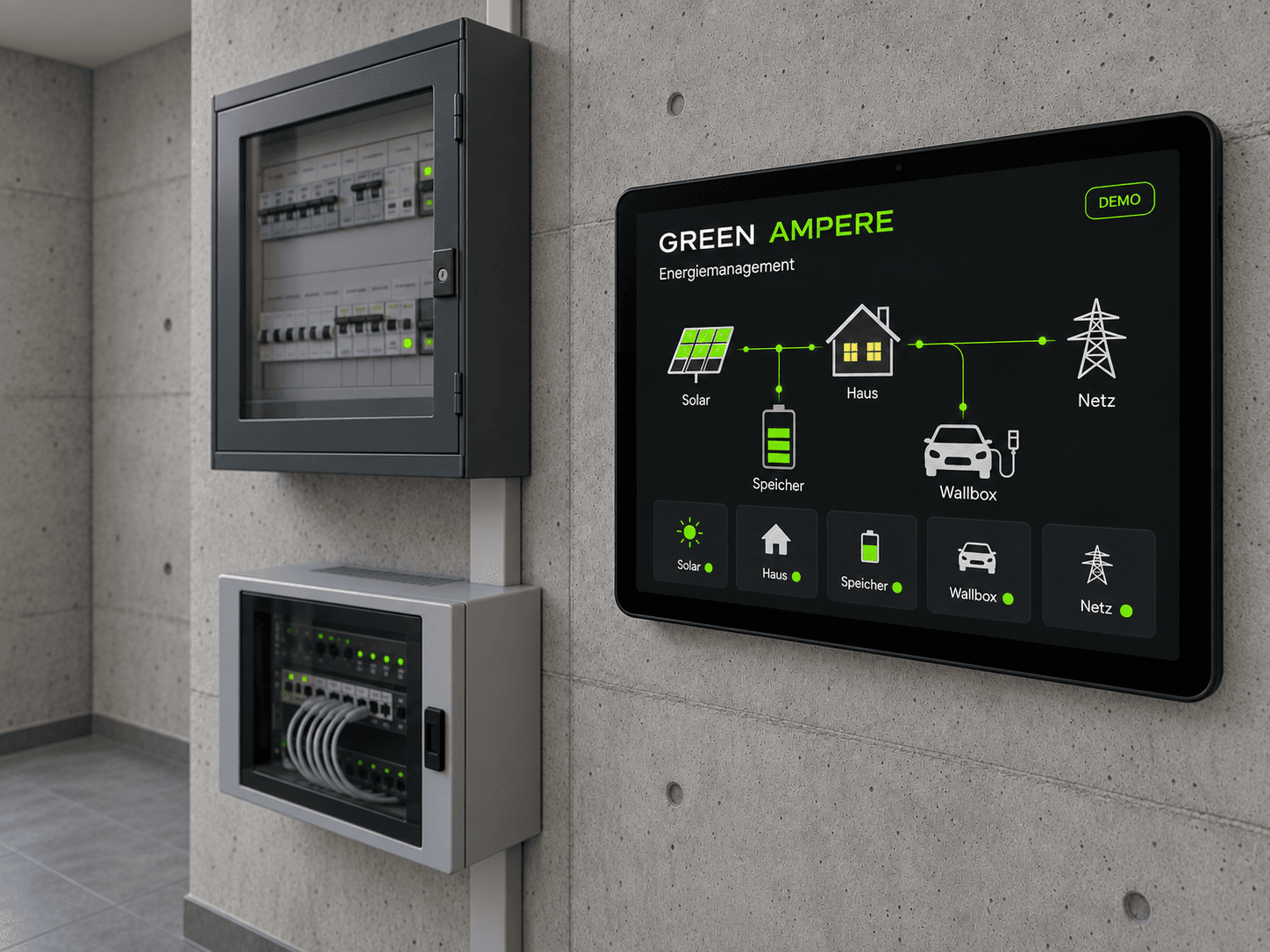
  • Illustrative image: tablet with energy management interface (demo) next to a home's fuse box

    Smart building

    Control systems together instead of separately — heating, shading, lighting, security and access know each other and the energy side.

    • Integrate existing technology instead of replacing it
    • Automate what runs the same way every day
    • The building's state in one view — Aurora OS, documented as a concept

Our role

We don't build houses. We build the intelligence behind them.

Green Ampere doesn't sell individual components. We plan how a building should work as a whole — and then make sure it does.

Photovoltaics, storage, heat pump, EV charger, smart home devices: those are parts.

An intelligent building isn't the result of buying enough of them. It's the result of someone deciding how they work together.

That decision is our work.

  • Planner

    We design the whole system before a single component is ordered.

  • System architect

    We define which layer decides what — and the channels systems use to talk to each other.

  • Designer

    Technology that gets in the way goes unused. How it looks and how it is used are part of the plan.

  • Integrator

    We bring together trades that usually work past one another.

  • Project coordination

    We keep every trade partner working to the same plan.

  • Technology orchestration

    We decide which technology stays, which is replaced and which is added.

Regulated work is carried out by qualified trade partners.

Connected Building

One building. Not a collection of devices.

Pick a point. What becomes visible isn't the trade — it's who it works with.

Select a point — with mouse, keyboard or finger.

Nothing selected yet. Every connection here is a decision that has to be planned.

EV charging infrastructure

Charging that knows the site.

One charging point is installed quickly. Ten charging points, a limited grid connection, a photovoltaic system and a business that needs power itself during the day — that is a planning task.

For businesses with a company parking lot, several vehicles or several charging points — and for anyone whose grid connection is the real limit.

What we take into account when planning

  1. 01

    Dynamic load management

    We plan the distribution of the available power across all charging points — according to what the connection can deliver right now, not what the nameplate says.

  2. 02

    Surplus solar charging

    Your own solar power takes priority: vehicles should charge preferentially when the roof delivers more than the building needs.

  3. 03

    Available connection capacity as the limit

    Planning starts from the actual grid connection. What it cannot carry is solved with storage and control — not with hope.

  4. 04

    Prepared for more

    Cabling, distribution and control are designed so that further charging points can be added without starting over.

  5. 05

    Prioritization by need

    We define who charges first: whoever has to leave first, ahead of whoever is parked until tomorrow — and the latter gets this afternoon's surplus.

  6. 06

    Storage and building loads

    We plan charging infrastructure together with battery storage, heat generation and the remaining loads — as one load profile, not three.

  7. 07

    Access and billing

    Who is allowed to charge and how it is billed belongs in the planning — for employees, fleet, guests and customers.

How much of this is implemented depends on the chosen charging hardware, the grid connection and the grid operator's requirements. Installation is carried out by qualified trade partners. We plan, coordinate and integrate — and say beforehand what is possible.

Assess your site
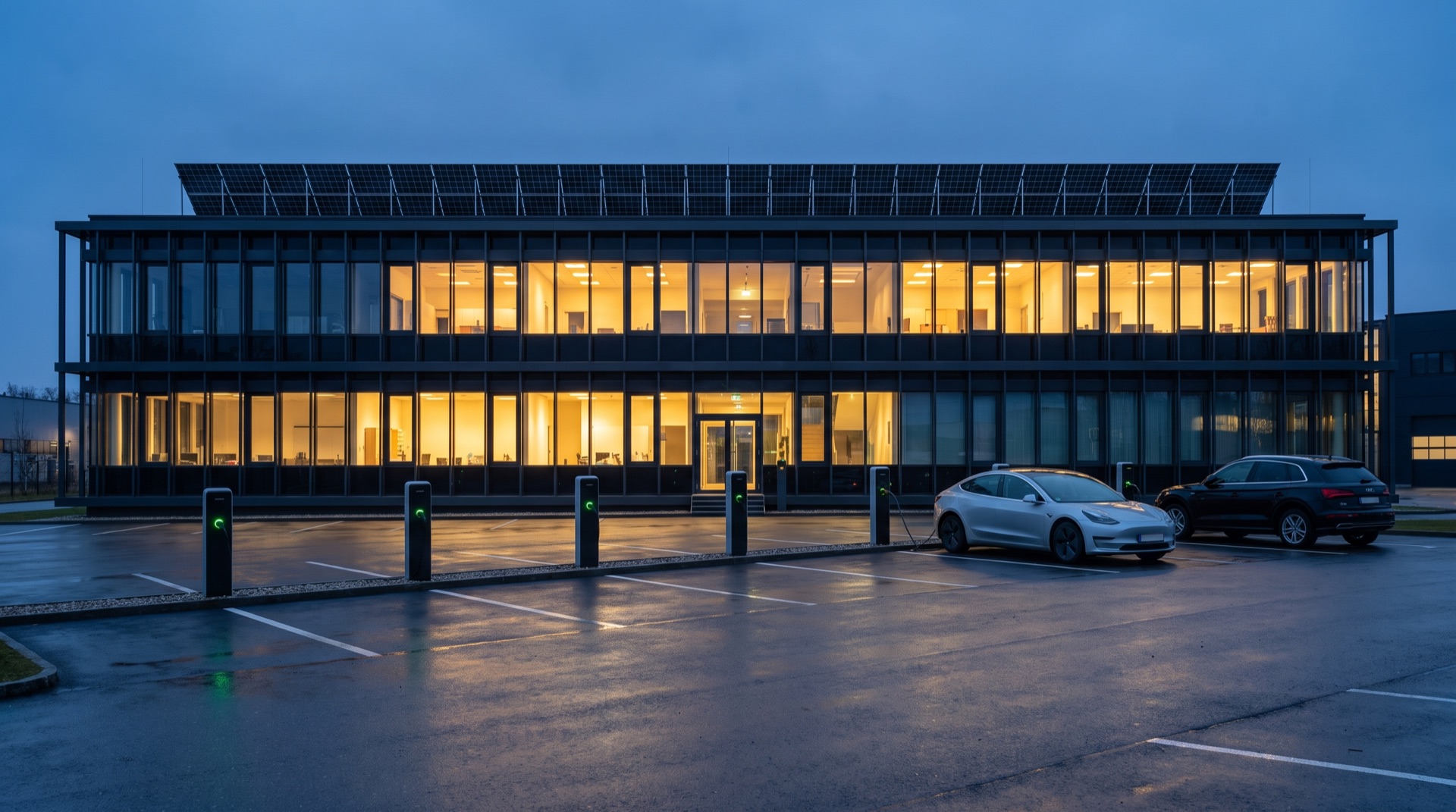
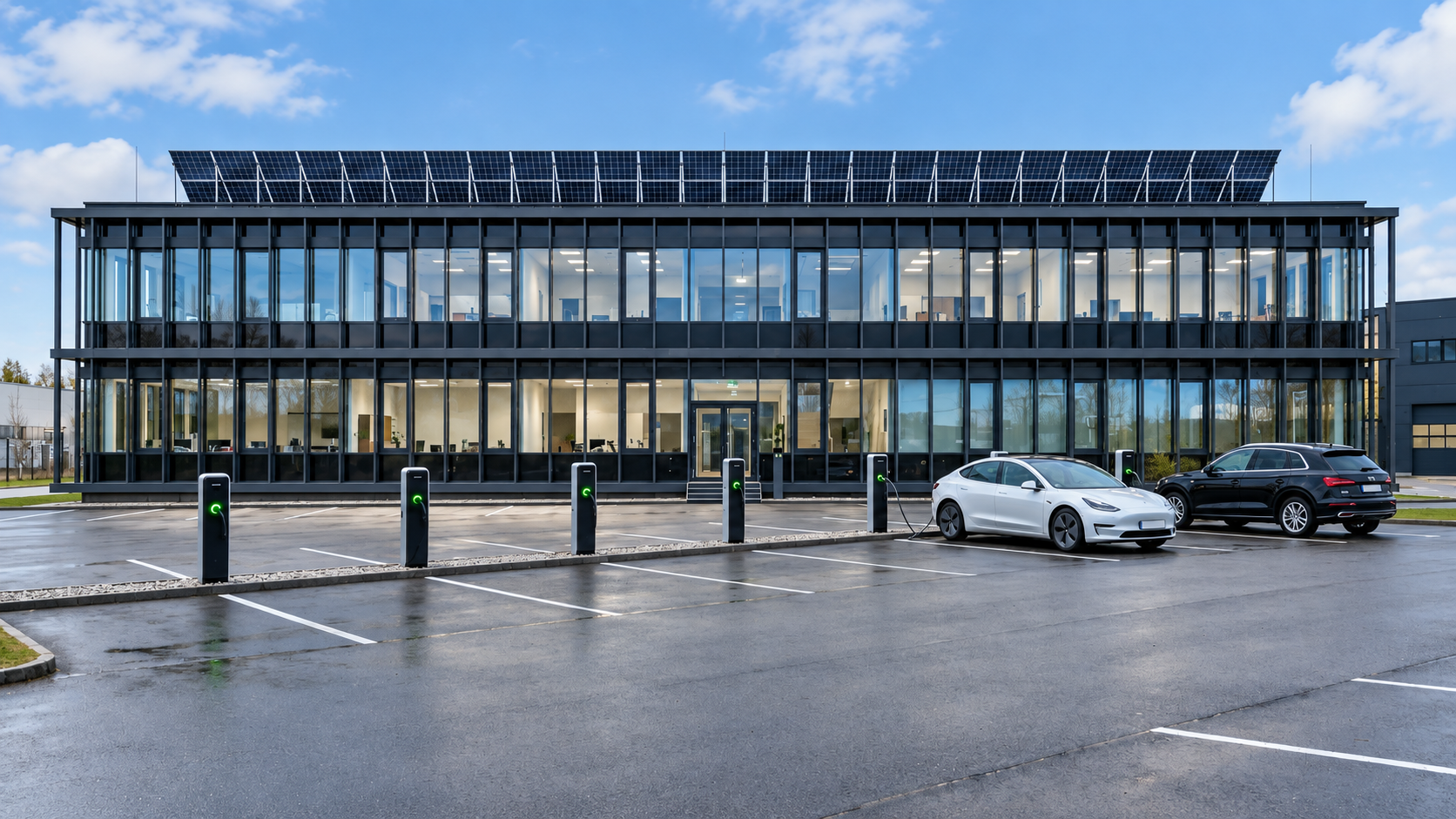
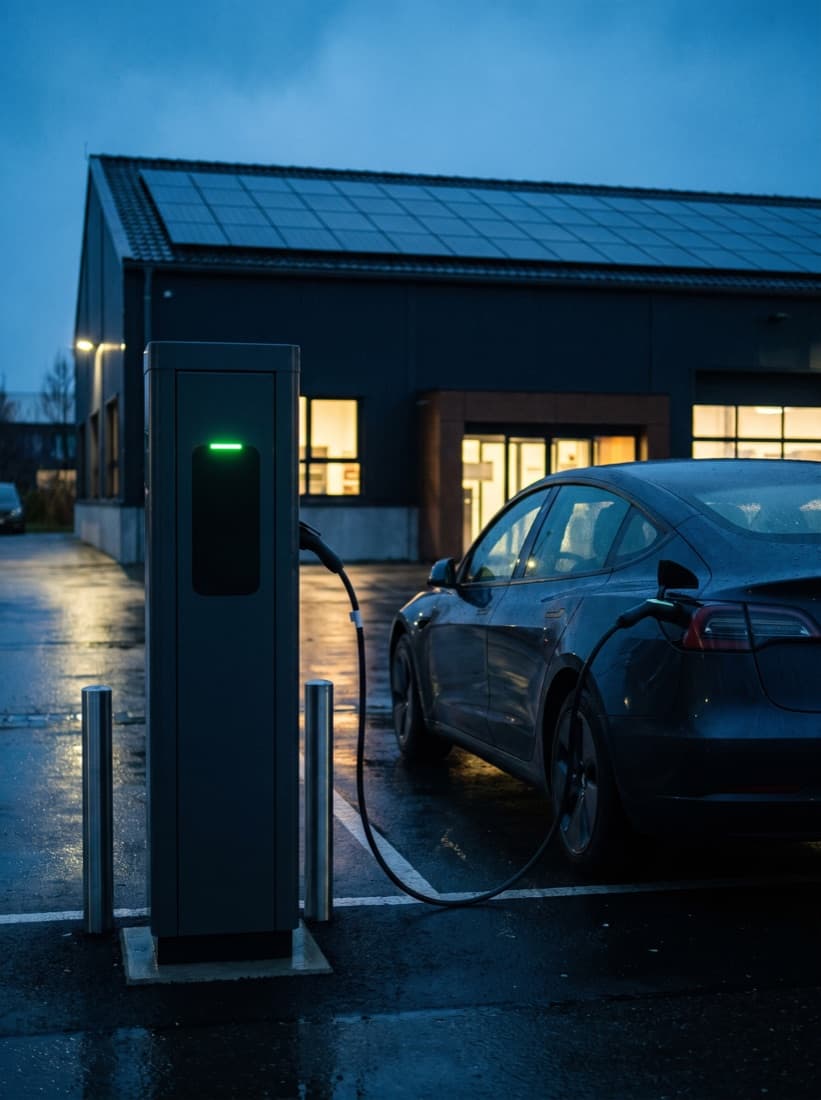
Illustrative image: charging column with a charging vehicle in front of a commercial building with photovoltaics

Aurora OS

Everything your home needs to know. Everything you want to know.

Aurora OS is the layer where the building becomes visible: one system, one view, one logic. Not a sixth app beside five others.

One system. One view. One intelligence.

See Aurora OS
Aurora OS
Demo data
  • Generationcurrently working

    6.4kW

    Clear afternoon

  • House loadcurrently working

    1.8kW

    Base load plus kitchen

  • Storagecurrently working

    78%

    Charging at 2.1 kW

  • Grididle

    0.0kW

    No import, no export

  • Heat pumpcurrently working

    1.1kW

    Hot water to 52 °C

  • Charging pointcurrently working

    1.4kW

    Departure 07:30 — target reachable

  • Poolcurrently working

    26.5°C

    Circulation until 16:00

  • Living areaidle

    22.4°C

    48% relative humidity

  • Securityidle

    Armed

    All windows closed

One system. One view. One intelligence.

Designed by Green Ampere. Powered by TailorMade Solutions.

The interface below is a demonstration. Every value shown is an example from a plausible situation — not a reading from a live installation.

In practice

Where the difference becomes measurable.

Three situations from daily operation in which separate systems regularly cost money and attention.

Use case 01

Use energy when it is there.

Generation, storage, load management and EV charging infrastructure are four investments. They only show their value once they share one decision logic.

  1. Raise self-consumption — Energy generated on site is used in operations before it leaves the property.

  2. Address peak loads — Controllable loads are shifted instead of all starting at once.

  3. Use storage deliberately — Charging and discharging follow operations, not a rigid schedule.

  4. Create transparency — Consumption becomes visible where it occurs — by area, not only at the meter.

Which peak loads can be reduced depends on the load profile and on how far the equipment can be controlled. That is a matter for the analysis, not a commitment made in advance.

Use case 02

One site. One system.

Heating, ventilation, lighting, shading, security, access, energy, charging, storage: nine trades, often nine responsibilities, usually nine interfaces.

  1. One interface — The operations team sees the state of the site in one place.

  2. One set of rules — Operating hours, presence and energy work together instead of against each other.

  3. One responsibility — There is one point of contact for the system architecture, not seven.

  4. One set of data — Analysis and records come out of day-to-day operation.

Use case 03

Several sites. One view.

As soon as there is more than one building, keeping track becomes the real task: what is running where, what has stopped, where is work piling up?

  1. States side by side — Generation, consumption, storage and alerts per site in a single view.

  2. Exceptions first — What needs attention comes into view — not what is running anyway.

  3. Comparable figures — Every site is assessed against the same measures.

  4. Step-by-step rollout — One site starts, the others follow the same architecture.

Green Ampere has no multi-site platform in production today. What is described here is the planned architecture — not an existing product.

Smart building

What belongs to an intelligent building.

Shading, lighting, security, access, indoor climate, heating and cooling, sensors, network, automation, energy management — parts of smart building, not separate projects.

Smart building is the fourth core area — and the layer that connects photovoltaics, storage and charging with the rest of the building. That is why everything the building has to know and do belongs here.

  • Energy management

    Generation, consumption and storage become one decision instead of three separate controls.

  • Heat

    Heat pump, hot water and buffer tank become controllable loads — and with that, thermal storage.

  • Cooling

    Cooling when the energy is there. And in the rooms that actually need it.

  • Shading

    Sun protection that knows where the sun is, how warm the room is and whether anyone is home — not just what time it is.

  • Lighting

    Lighting moods that suit the moment — and lights that switch themselves off when nobody is there.

  • Security

    Alarm, cameras and alerts in one view instead of four separate apps.

  • Access

    Doors, gates and permissions — clearly regulated, for guests and trade partners too.

  • Indoor climate

    Temperature, humidity and ventilation per zone, instead of one setting for the whole house.

  • Sensors

    What lets the building know what is happening in the first place.

  • Network

    A solid, secured foundation. Without it, every automation is only a promise.

  • Automation

    Routines that happen on their own — not scenes someone has to call up every day.

Foundation

Understand energy. Control consumption. Reduce cost.

In that order. Without a reliable view of consumption, every measure stays guesswork — and every promised saving stays a claim.

Process

How we work.

Seven steps. The most important is the second — because after it, nothing has to be improvised.

  1. 01

    Understand

    We look at the building: what is there, what it has to do and what gets in the way today.

  2. 02

    Plan

    We design the system architecture — completely, before anyone installs anything.

  3. 03

    Select

    We choose technology that works together. Compatibility beats the data sheet.

  4. 04

    Implement

    Qualified trade partners carry out the work. We coordinate them.

  5. 05

    Connect

    The trades are brought together — technically and logically.

  6. 06

    Make it intelligent

    Automations turn connected technology into a system that decides on its own. The shared interface for that is Aurora OS — documented today as a concept, not as a finished product.

  7. 07

    Refine

    A building is never finished. Rules are re-tuned when use or technology changes.

Where to start

Green Ampere Smart Building Check

Ten questions about site, technology and goals — photovoltaics, storage, EV charging infrastructure and building technology. The result is a first qualitative assessment as the basis for an initial conversation.

  • Takes about three minutes
  • Possible even without consumption data
  • Result visible immediately

A first digital assessment — not technical planning and not a quote.

One system for energy, building and mobility.

Ten questions give you a first qualitative assessment of the potential at your site.

Start the Smart Building Check